
A custom box may look simple from the outside. But behind every good packaging box, there are several important choices.
The size must suit the product. The cardboard must be strong enough. The print must look clear. The box must be easy to pack, store and transport. If even one of these details is missed, your business may end up paying for boxes that do not work well.
This is why a box manufacturer will usually ask several questions before giving you a price. These questions are not asked to make the process difficult. They help the manufacturer understand your product and suggest the right custom packaging solution.
Whether you sell food products, garments, cosmetics, spare parts, electrical goods, gifts, healthcare items or online products, sharing the right information can save time, reduce waste and avoid costly mistakes.
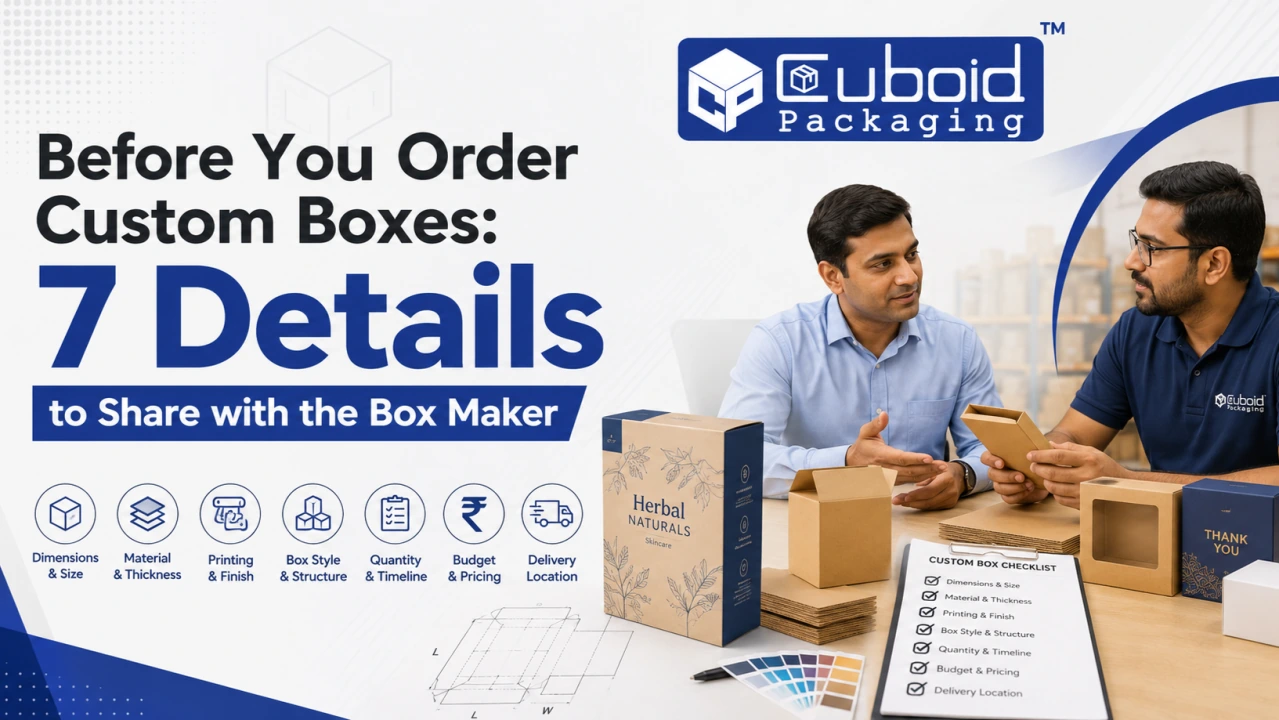
Here are the seven most important details to share with your box maker before ordering custom cardboard boxes.
1. Explain What Product You Want to Pack
The first thing your box manufacturer needs to know is the product that will go inside the box.
Do not simply say, “I need a cardboard box.” Explain the product clearly.
For example:
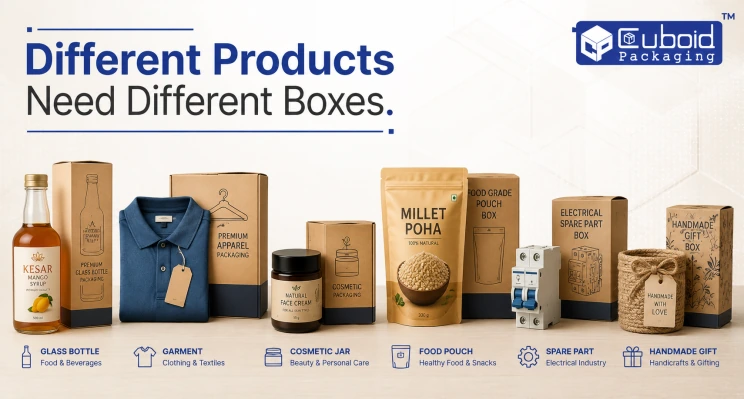
Different products need different types of packaging.
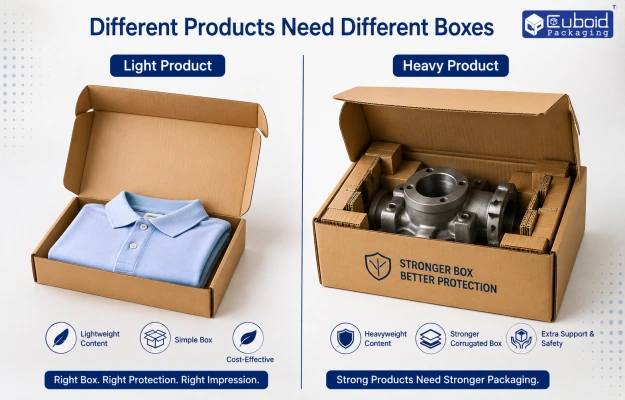
A lightweight garment box may not need the same strength as a box used for metal spare parts. A glass bottle may need partitions or an inner support. A food product may need packaging made using suitable materials. An online order may need a strong outer box that can handle transport.
Your box maker must also know whether the product can break, leak, bend, scratch or get damaged by moisture.
For example, imagine that you sell handmade candles. If you tell the manufacturer only the candle size, an ordinary carton may be suggested. But if you explain that the candle is packed in a glass jar and sent by courier, the manufacturer can plan a stronger box with an inner holder.
The more clearly you explain the product, the easier it becomes to choose the right cardboard thickness, box style and inner support.
Questions to answer
Before speaking to the box manufacturer, note down the following:
These basic details help your box maker understand the real purpose of the packaging.
2. Share the Exact Product Size
The second important detail is the product size.
Measure the product’s:
Give all three measurements in millimetres, centimetres or inches. Clearly mention which unit you are using.
For example:
Product size: 20 cm length × 12 cm width × 6 cm height
Do not guess the measurement. Use a measuring tape or ruler and check it carefully.
If the box is too small, the product may not fit. If the box is too large, the product may move inside and get damaged. A large box may also need more packing material. This increases the total packaging cost and may increase courier charges.
The box maker must also know whether the given measurement is the product size or the required box size. These are not always the same.
Extra space may be needed for:
Suppose your product measures 15 cm × 10 cm × 5 cm. If you plan to add foam on all sides, the final box must be slightly larger. If you give only the product size without mentioning the foam, the box may become too tight.
For products with an unusual shape, share a real sample whenever possible. You can also send clear photos from the front, side and top. A sample helps the manufacturer check the shape and plan a better box.
A useful tip for businesses
Do not copy the box size used by another brand simply because the product looks similar. Even a small difference in the product shape can affect how well it fits.
A custom box should hold your product safely without wasting too much space.
Correct measurements can help you:
Measure twice before confirming the size. It is a small step that can prevent a big problem.
3. Tell the Box Maker the Product Weight
The size of a product tells only one part of the story. Its weight is equally important.
Two products may have the same size but need completely different boxes.
For example, a cotton garment and a metal spare part may fit inside boxes of the same size. But the metal part will need a stronger cardboard box because it is much heavier.
Share the weight of:
If several units will be packed together, mention the total number of units and total weight.
For example:
One unit weighs 500 grams. Twelve units will be packed in one outer box. The total product weight will be about 6 kilograms.
This information helps the cardboard box manufacturer decide:
A weak box may bend, tear or open from the bottom during lifting and transport. This can damage the product and create a poor impression of your brand.
At the same time, choosing a box that is much stronger than needed may increase the cost without giving any real benefit. The goal is to use the right box strength for the product and its journey.
4. Explain How the Box Will Be Used
A box used on a retail shelf has a different job from a box used for courier delivery.
Tell the manufacturer exactly where the box will go after packing.
Will it be:
This detail affects the box material, design and structure.
Retail packaging
A retail box must attract attention and explain the product quickly. It may need clear printing, brand colours, product information, a window or a special opening style.
E-commerce packaging
An e-commerce box must protect the product during sorting, stacking and delivery. It may need strong corrugated cardboard, proper closing and less empty space.
Transport packaging
A transport carton may hold many smaller boxes. It must handle product weight, stacking and movement inside a vehicle.
Gift packaging
A gift box often focuses on appearance and the opening experience. It may use a rigid structure, printed sleeve, inner holder or premium finish.
Warehouse storage
If the boxes will be stacked for several days or weeks, tell the manufacturer how many boxes may be kept one above another. This helps in choosing a box that can handle the load.
Tamil Nadu businesses must also think about heat, humidity, rain and long road travel. A box sent from Chennai to Madurai, Coimbatore, Tirunelveli or another state may pass through several storage and transport points.
Explain the complete journey of the product, not just where it starts. A box that looks good at the packing table must also reach the customer in good condition.
5. Choose the Box Style and Opening Type
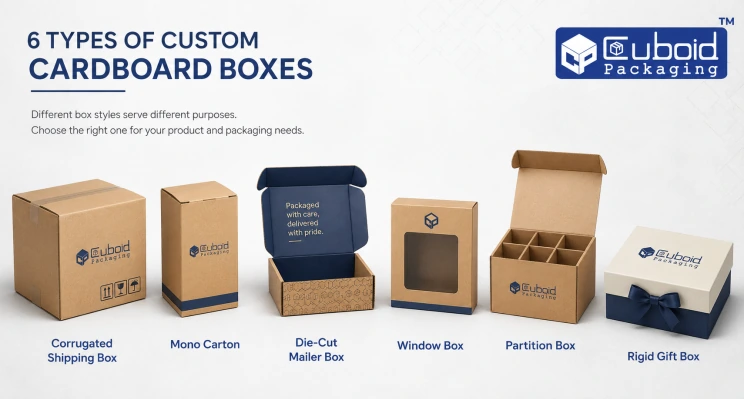
Custom cardboard boxes are available in many styles. You do not need to know every technical name. Simply explain how you want the box to open, close and hold the product.
Common options include:
If you already have a box style in mind, share a photo or sample. If you are not sure, explain how the customer will use the box.
For example:
The box maker can then suggest a suitable structure.
Think about the packing process too
A box should not only look attractive. Your team must be able to pack it quickly.
If every box takes several minutes to fold and close, packing a large order may take too much time. A difficult box style can slow down production and increase labour work.
Before placing a full order, ask for a sample and test it with the person who will actually pack the product. Check whether it is easy to fold, fill, close, stack and carry.
Good packaging design should work for both the customer and the packing team.
6. Provide the Printing and Design Details
Custom printed boxes carry your brand into the customer’s hands. Therefore, the printing details must be shared correctly.
Tell the manufacturer what you want printed on the box.
This may include:
Share the final design file in the format requested by the box maker. A small image taken from WhatsApp may not give a sharp print. Ask your designer to provide a clear, print-ready file.
Also share the correct brand colours. Colours may look different on a phone screen, computer screen and printed cardboard. If colour matching is important, provide a colour reference or an earlier printed sample.
Decide the type of look you want
Your packaging can be:
The design should match the product and its target customer.
For example, a children’s product may use bright colours and friendly images. An industrial spare-parts box may need clear product codes and handling instructions. A handmade food brand may prefer a warm, natural design.
Do not fill every part of the box with text. A clear box design is often easier to notice and remember.
Before approving the print, check every word carefully. Look at:
Once hundreds or thousands of boxes are printed, changing an error can be costly. Final approval should always be given only after checking the design properly.
7. Share the Quantity, Budget and Delivery Date
The final key detail is the required order quantity.
Tell the box manufacturer:
The number of boxes can affect the production method and price per box.
A startup testing a new product may need a small quantity. A growing food company may need regular monthly orders. A large manufacturer may need bulk packaging in planned batches.
Be honest about your present requirement. Do not ask for the price of 10,000 boxes if you are planning to buy only 500. A correct quantity helps the manufacturer give a more useful quote.
Cuboid Packaging supports businesses with customised cardboard packaging and low minimum order quantity options, based on the type of box and job requirement. This can help startups, small businesses and growing brands test their packaging before moving to larger orders.
Discuss the delivery date early
Custom boxes are made through several steps. Depending on the order, the work may include:
Do not wait until the last few days to place your custom box order. Keep enough time for sample checking and production.
If you need the boxes for a product launch, festival sale, trade show or large customer order, share the exact date at the beginning. This allows the manufacturer to check the production plan and give you a practical delivery schedule.
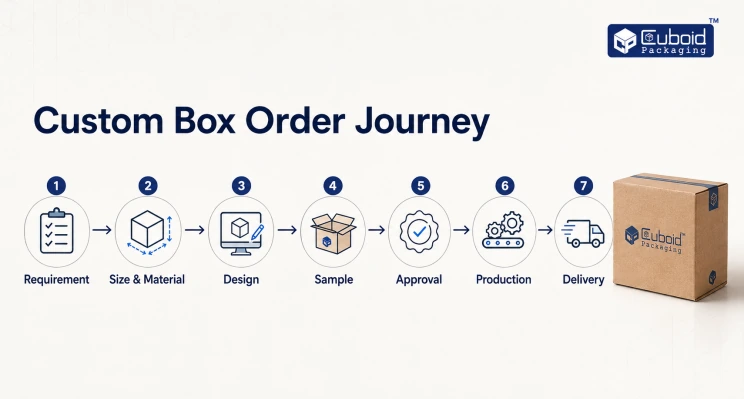
Ask for a Sample Before the Full Order
Even when all seven details are shared correctly, checking a physical sample is a smart step.
Place the actual product inside the sample and test it.
Ask yourself:
If possible, perform a simple handling test. Pack the product, lift the box, stack it and move it as it would be moved during normal delivery.
A sample can reveal small problems before the full quantity is produced. Changing a sample is much easier than correcting an entire order.
A Simple Checklist to Send Your Box Maker
Before asking for a custom packaging quote, prepare the following information:
Product information
Size and weight
Box requirement
Printing requirement
Order information
Sending these details in one message can reduce back-and-forth communication and help you receive a more accurate custom box quote.
Common Mistakes to Avoid When Ordering Custom Boxes
Many packaging problems begin with small mistakes. Avoid these common ones:
Ordering only by price
The lowest-priced box may not always provide the strength your product needs. Compare the material, box size, printing, finishing and support included in the quote.
Giving an estimated size
A small measurement error can make the box too tight or too loose. Always measure the real product.
Forgetting the product weight
A box that fits perfectly may still fail if it cannot hold the weight.
Ignoring the delivery journey
A box suitable for shop display may not be strong enough for courier delivery.
Approving the design too quickly
Check every word, number, colour and barcode before printing.
Skipping the sample
A sample helps you see and test the real box before full production.
Ordering too late
Custom packaging needs planning, sample approval and production time. Place the order early.
The Right Information Creates the Right Box
A good custom box is more than a container. It protects your product, supports transport, helps customers identify your brand and improves the way the product is presented.
To get the right result, start by sharing the right details.
Tell your box maker what the product is, its exact size, its weight, how the box will be used, the preferred box style, the printing needs and the required quantity. Also share your budget, delivery date and location clearly.
These seven details help the manufacturer recommend a custom cardboard box that fits your product and business needs.
Cuboid Packaging manufactures customised cardboard packaging for businesses across Tamil Nadu. From small trial requirements to economical bulk orders, we help brands choose practical packaging based on their product, quantity and purpose.
Planning a new product pack or looking for a better box for your existing product? Share your requirement with Cuboid Packaging and begin with the right packaging plan.
Get Your Custom Box Requirement Reviewed Today