
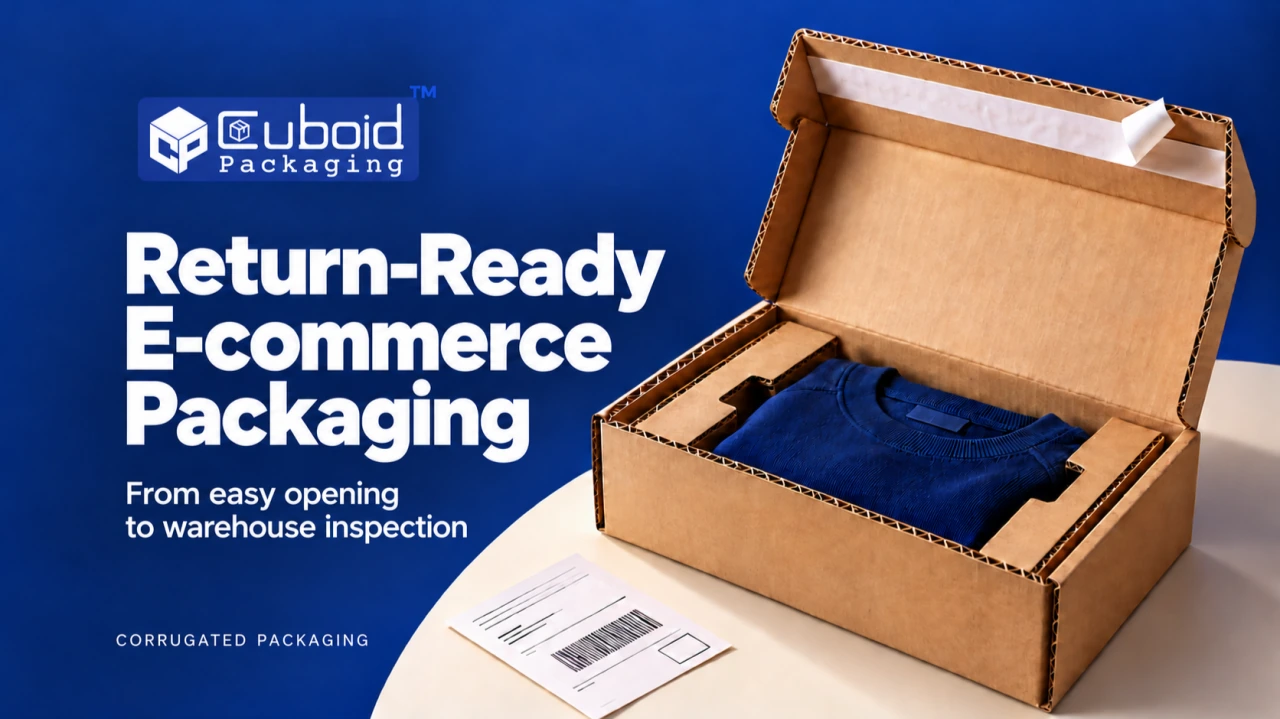
Return-ready e-commerce packaging should survive sensible opening, give the customer a clear way to repack and reseal, and arrive with enough identification for the receiving team to process it. The design is only complete when those steps have been tested together. A second adhesive strip is useful, but it cannot compensate for confusing instructions or a box that is no longer suitable for another journey.
For a growing online brand, returns involve several people: the customer, support team, carrier and warehouse. Each sees a different part of the problem. A customer may not know which insert to keep. A warehouse may receive an unidentified parcel. A buyer may order a resealable box without defining how its condition will be assessed.
This guide focuses on that second journey. It sets out a practical workflow for consumer returns, inspection and conditional packaging reuse. It does not assume every returned product can be resold or every used box can travel again.
Define the return route before the box
Start with the actual service your customer will use. Will a courier collect a sealed parcel? Will a drop-off point apply a label? Does a particular marketplace supply instructions? Are customers expected to keep the original packaging?
Document the route for each sales channel. A printed instruction that suits one carrier can be confusing on another. Keep the packaging message aligned with the current return process, including who authorises the return and where the customer obtains the correct label.
Also distinguish a return-ready outbound pack from a reusable logistics system. A box designed to support one customer return has a different purpose from a container managed through many controlled cycles. Do not promise a fixed number of reuses without suitable evidence.
Design opening and reclosure as separate moments
The first opening determines what remains available for the return. If the customer has to cut through a structural flap, tear away an essential panel or destroy the insert, a later resealing feature may have little value.
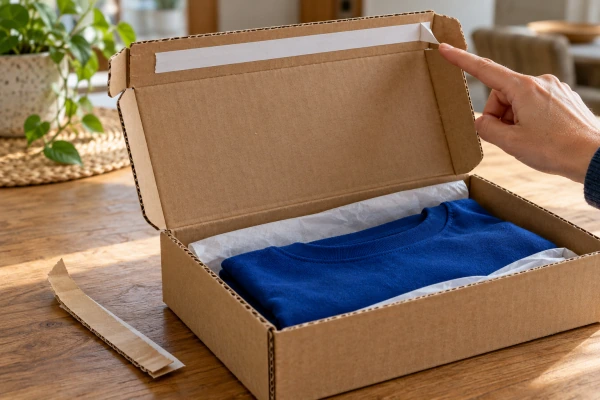
Show the intended opening point clearly. Keep it away from the product where the construction allows. Then make the return closure recognisable after opening. Test whether a person unfamiliar with the pack can identify both steps without a demonstration.
Packaging equipment manufacturer Baumer hhs describes e-commerce applications in which a second adhesive strip allows the customer to reseal the package. The useful design principle is separation: the material used for the initial shipment should leave a usable closure for the return.
There are other constructions. DS Smith’s Tape Back product page describes a resealing design using one glue strip for two shipments. This is a real manufacturer example of the function being engineered in a different way, not evidence that any ordinary adhesive strip can be used twice.
For your own pack, specify the required opening and resealing behaviour. Ask the packaging supplier to show the available constructions, then test the proposed sample. Avoid assuming that a photographed feature is available or suitable in your required material and quantity.
Write instructions for someone packing at home
A warehouse operator has a packing table, replacement materials and repeated practice. A customer may have none of these. Return instructions should be short, visible and matched to the physical pack.
Consider a simple sequence: retain the useful inserts, place the product back as shown, secure the return closure, and apply or obtain the correct return label. The precise sequence should follow the product and authorised carrier process.
Place instructions where they remain readable after opening. If all guidance sits on a discarded tear strip, the customer loses it when it is needed. Use a small diagram where orientation is easier to show than explain.
Keep packaging instructions separate from eligibility
The pack can explain how to prepare a parcel. The return policy explains whether an item is eligible, how the request is approved and what happens next. Link to the current policy through a verified brand destination rather than printing a long policy that may become outdated.
Have customer service review the wording before artwork approval. Check that it does not promise a refund, free collection or acceptance of every opened product unless the brand’s actual policy supports that promise.

Make the internal pack easy to reconstruct
A return may include fewer items than the outbound order. Inserts may be missing, and customers may remember the unpacking sequence imperfectly. Test what happens in these ordinary situations before choosing the final construction.
If an insert matters to product protection, make its role clear. A reversible pad may be easier to replace than a complex fitment with several similar-looking flaps. Where direction matters, a simple orientation cue can help.
Include a way to identify small accessories without asking the customer to write personal information on the retail pack. A return reference can connect the parcel to an authorised request when your system supports it. Specify which identifier the receiving team actually uses.
If the original packaging is missing or unsuitable, give a clear support route. Asking a customer to force a product into a torn box simply because it is the original pack does not create a reliable return.
Plan a clean label handover
The return journey needs the correct current routing information. Identify an appropriate label area and show how the old shipping identification should be handled under the chosen carrier’s rules. Avoid placing a label across a seam or opening feature.
Carrier guidance is not identical everywhere. UPS’s US shipping-tools FAQ permits reuse of an undamaged box and asks customers to remove old labels or shipment markings. DHL Express’s US packing guidance is more cautious about old boxes and also addresses removal of previous labels. These are examples of why brands should confirm the requirements of their actual service.
Do not simply copy overseas instructions onto an Indian return pack. Check your contracted carrier, route and product category. Special handling or dangerous-goods requirements need their own process; a general returns diagram is not sufficient.
Think about privacy as well as routing. Returned packaging can retain the customer’s name and address. Decide how those labels will be handled before a box leaves the controlled returns process or is considered for another shipment.
Create a receiving check that separates two decisions
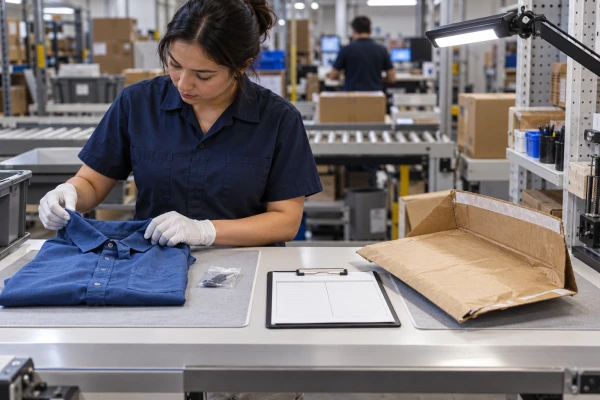
The warehouse needs to assess the returned product and the returned packaging separately. An intact carton does not prove the product is saleable. A damaged carton does not, by itself, establish the condition of everything inside.
Record the return reference and visible arrival condition before repacking changes the evidence. Use your normal quality and privacy procedures for photographs. The purpose is an accurate record, not an assumption about who caused the damage.
Product assessment
Check identity, quantity, relevant accessories and condition against the category-specific process. Decide who can authorise the next status. Apparel, cosmetics, electronics and food can have very different handling requirements.
Packaging assessment
Check the structure, panels, corners, closures, cleanliness and required markings. Look for damage or contamination that makes further handling inappropriate. Consider whether any remaining insert still performs its intended function.
Disposition
Use clear routes such as approved for a defined reuse, replace the packaging, or isolate pending the relevant safety or quality decision. Write the criteria for each route. A convenient empty carton should not automatically enter a pool of shipping boxes.
Where batteries, leaking products, sharp fragments or other hazards may be involved, follow the appropriate trained handling process. Do not ask an untrained operator to improvise an inspection because the parcel is labelled as a routine return.
Approve reuse against a defined next use
“Reusable” is incomplete without a destination. A carton may be acceptable for internal movement but unsuitable for a customer shipment. An insert may be reusable with the same product but inappropriate for another shape or weight.
Specify the permitted next use and who can approve it. Where carrier rules, customer requirements or hygiene standards prevent reuse, follow those requirements. Keep unsuitable material physically separate so that a busy packer does not make the decision at the last moment.
Even when reuse is allowed, confirm that old personal details and obsolete shipping information have been addressed. Then verify the new product-to-pack fit and the new closure method. The previous successful delivery does not certify the next one.
Avoid environmental claims that depend on reuse happening when it has only been made possible. If the brand wants to discuss actual reuse, measure what was approved and used, with an understandable definition.
Test a complete return before launch
Run a small controlled exercise using the proposed pack, actual product and final instructions. This is an operational usability trial; agree any required transport testing separately with the appropriate specialist.
Revise the unclear step and repeat the exercise. Watch behaviour rather than relying only on “easy to use” feedback. A participant may say the task was simple after spending several minutes finding the right flap.
Keep an approved opened sample as well as a closed sample. The opened version shows what the customer should have available for the return, which a pristine outbound sample cannot demonstrate.
A hypothetical example: the missing insert
Imagine an online accessories brand using a neatly fitted corrugated insert. This is a hypothetical workflow example, not a Cuboid Packaging customer case study.
In a trial, customers recognise the resealing strip but discard a loose support piece during opening. When returning one item from a larger order, they place it in the empty outer box. The warehouse receives a parcel with a working closure and an incomplete internal pack.
The next design discussion should examine the whole sequence: whether the support can remain attached, whether its purpose is obvious and what instructions apply to partial returns. Adding another adhesive strip would not address the observed gap.
No savings or damage reduction can be claimed from this hypothetical exercise. Its value is the question it reveals: can a customer reconstruct the parts of the pack that matter?
Collect evidence that improves the process
Use a short return-packaging log alongside existing return records. Include the packaging version, whether the intended closure was used, which components were missing, whether the return was identifiable and which receiving action followed.
Keep product-return reasons separate from packaging observations. A size exchange and a damaged package can occur together, but they describe different problems. Combining them in a single “returns” number makes it difficult to identify the next useful change.
Review patterns with support, operations and the supplier. If customers repeatedly miss a printed step, reconsider its position or wording. If receiving staff cannot find the reference, review the label arrangement. Change one identifiable part of the process where practical, then check the result.
Frequently asked questions
Does return-ready mean the box can always be reused?
No. Actual condition, intended next use, product requirements and carrier rules still matter. A return feature makes a second closure possible; inspection determines whether the specific pack is appropriate.
Should every box have two adhesive strips?
Choose the closure around the workflow. Different constructions can support returns. Evaluate opening, resealing, material compatibility and the customer’s ability to use the feature.
Can a return QR code replace all printed instructions?
Keep essential physical steps understandable on the pack. A verified digital destination can provide current detail, but test the experience for someone who cannot conveniently scan the code.
What should a brand bring to the packaging supplier?
Bring an actual product, its outbound pack, the return-policy journey, carrier requirements, partial-return scenarios and examples of recurring confusion. Include the receiving team’s identification and inspection needs.
Design for the people on both ends
A useful return-ready pack helps the customer prepare the parcel and helps the warehouse understand what arrived. Opening, repacking, labelling and inspection deserve the same attention as the outbound presentation.
For a discussion with Cuboid Packaging, start with the return journey and a representative product sample. Ask which construction and sampling options suit that workflow, then approve the complete process before ordering at scale.