
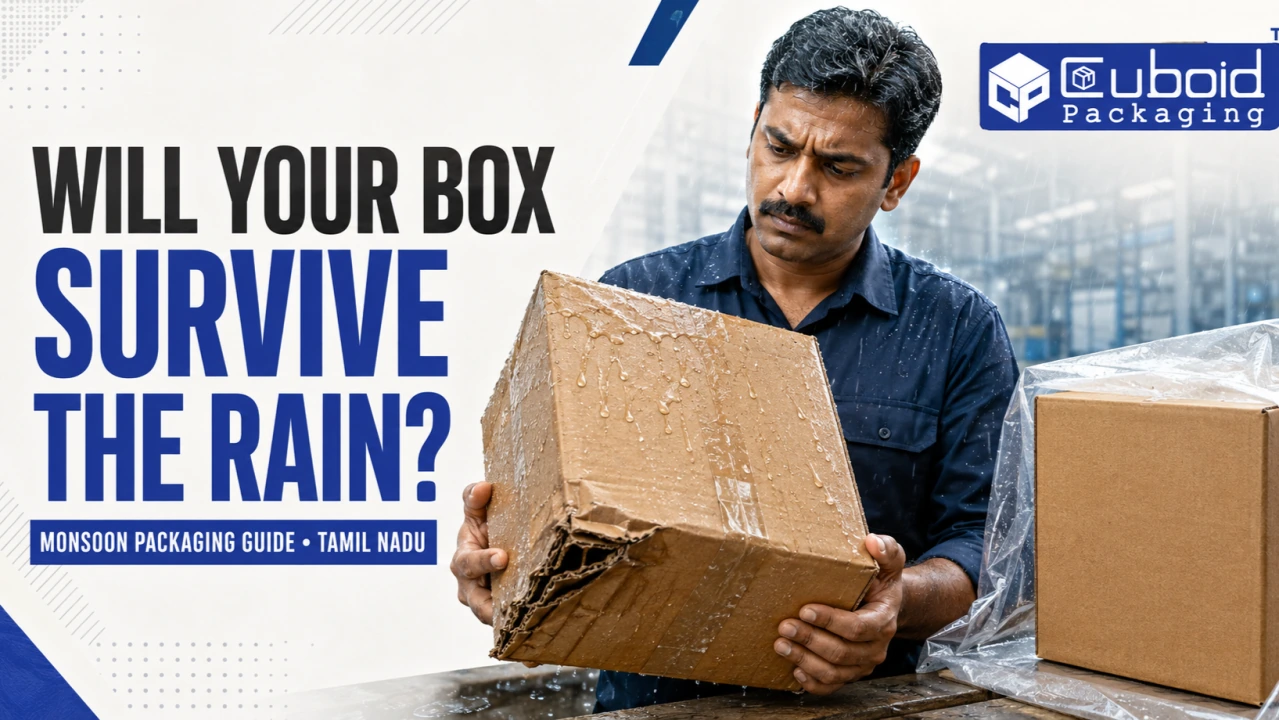
The first rain of the season may feel refreshing. But for a business sending products in cardboard boxes, it can quickly become a serious problem.
A box that looked strong while leaving the factory may arrive soft, bent, crushed, or partly open. The product inside may also be wet, damaged, stained, or unsafe to sell.
This is a common concern during the Tamil Nadu monsoon. Businesses in Chennai, Coimbatore, Tiruppur, Madurai, Salem, Hosur, Trichy, and other parts of the state face rain, high moisture in the air, wet roads, leaking vehicles, and damp storage areas.
So, will your box survive the rain?
The answer depends on how the box is designed, made, sealed, stored, and moved. Let us look at how to create better monsoon-proof cardboard packaging for your products.
Why Do Cardboard Boxes Become Soft During the Monsoon?
Cardboard is mainly made from paper. Paper has tiny fibres that absorb moisture from the air and from direct contact with water.
When these fibres take in too much moisture, they begin to lose their stiffness. The box may then become soft, weak, and easy to crush.
Rain is not the only reason for cardboard box damage. High humidity can also weaken a box, even when no rainwater touches it directly. This is especially important in coastal areas such as Chennai, where the air can stay moist for long periods.
A box may also become weak when:
Monsoon damage often starts slowly. You may first notice soft corners, loose tape, bent side walls, faded printing, or a bulging bottom. If these signs are ignored, the whole box may fail during lifting or stacking.
Is Cardboard Packaging Really Waterproof?
Normal cardboard packaging is not fully waterproof.
However, it can be made more resistant to rain and moisture. A well-designed box can handle small water drops, short rain exposure, damp air, and normal monsoon transport better than a basic box.
There is an important difference between water-resistant and waterproof packaging.
A water-resistant cardboard box can slow down water entry for a limited time. A fully waterproof pack should stop water from reaching the product even during longer exposure.
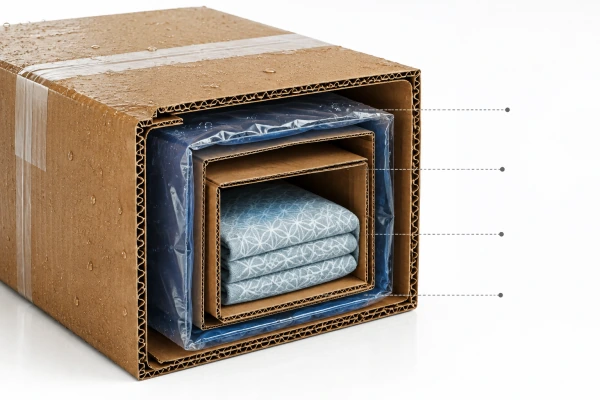
For most businesses, the best solution is to use a strong outer corrugated box along with suitable inner protection. This gives the product two levels of safety.
The outer box protects against handling, stacking, and small rain exposure. The inner cover protects the actual product from water and moisture.
1. Start with the Right Type of Cardboard Box
A good monsoon packaging plan starts with the correct box material.
Not every product needs the same type of cardboard box. A light clothing item, a machine spare, a food product, and an electrical part all need different levels of protection.
Three-ply corrugated boxes may be suitable for light products and short delivery routes. Five-ply corrugated boxes may offer better support for heavier products, longer transport, and higher stacking needs.
However, simply choosing five-ply cardboard does not automatically make a box safe. Paper quality, flute type, box size, product weight, storage time, and delivery conditions also matter.
The final box should be selected based on:
A box that is too weak may fail. A box that is much stronger than needed may increase your packaging cost. Custom cardboard packaging helps you find a practical balance between safety and cost.
2. Do Not Select a Box Using GSM Alone
Many buyers ask only one question: “What is the GSM of the cardboard?”
GSM tells us the weight of the paper used for one square metre. It is useful, but it does not tell the complete story.
Two boxes with a similar GSM can perform differently because of the paper quality, flute design, adhesive, number of layers, and way the box is made.
During the monsoon, you should also look at the box’s ability to handle pressure, stacking, and moisture. Ask your cardboard box manufacturer to suggest the material based on the actual product and delivery route.
For example, a box carrying five kilograms of soft clothes has different needs from a box carrying five kilograms of metal parts. The weight may be the same, but the risk is different.
3. Add an Inner Moisture Barrier
The outer box should not be the only protection given to your product.
An inner moisture barrier can save the product even if the outer cardboard becomes slightly damp. This is one of the most useful steps in monsoon-proof cardboard packaging.
Depending on the product, inner protection may include:
Garments, home textiles, books, printed materials, food packs, electrical items, and metal parts can all benefit from the right inner cover.
The inner cover should fit the product properly. It should not be left open at the top. Water can enter through a small gap and remain trapped inside the pack.
For food, medical, cosmetic, and sensitive products, always use approved packaging material that is suitable for that product.
4. Use a Suitable Outer Surface Protection
A coating or laminated surface can help slow down water entry.
The best option depends on the product, budget, printing need, delivery condition, and recycling goal. Some surface treatments provide only light moisture resistance. Others offer stronger protection but may affect recycling.
Possible options include:
Do not assume that every shiny box is safe from rain. A coating may protect the flat outer surface, but water can still enter through cut edges, handle holes, joints, corners, and openings.
Ask your packaging manufacturer what level of water resistance the surface provides. If your boxes may face direct rain, inform the manufacturer before production begins.
5. Seal Every Opening Properly
Water usually enters through the weakest part of a box.
This may be the top flap, bottom flap, side joint, handle hole, or an opening created during transport.
Use good-quality packing tape that can hold firmly in humid weather. The tape should cover the main opening fully and extend properly across the sides.
For heavy products, extra taping may be needed at the bottom. Some boxes may also require strong stitching, pasting, or strapping.
Before sealing the box, make sure the cardboard surface is clean and dry. Tape may not stick properly to dusty, wet, or oily surfaces.
Do not reopen and close the same box many times. Repeated opening can damage the flap and reduce the strength of the seal.
6. Choose the Correct Box Size
A large box with a small product inside may look harmless, but it creates a serious monsoon risk.
Empty space allows the product to move. When the cardboard becomes slightly soft, the moving product can push against the sides and damage the box from within.
Too much empty space also reduces stacking strength. The top panel may bend down when other boxes are placed above it.
Use a box that fits the product closely. Add suitable inserts, partitions, paper filling, or corner supports where needed.
Custom-sized cardboard boxes offer several benefits:
A correct fit is especially important for glass items, machine parts, bottles, electronics, cosmetics, and products with sharp edges.
7. Keep Every Box Away from the Floor
Even the strongest box can become weak when it is kept directly on a wet floor.
During the monsoon, warehouse floors may look dry but still hold moisture. Water can also move under a box without being noticed.
Always keep finished boxes and packed goods on pallets, raised platforms, or storage racks. Leave a small gap between the boxes and warehouse walls.
Avoid stacking boxes below leaking roof areas, open windows, water pipes, or air cooler outlets.
Follow a few simple warehouse rules:
A dry warehouse is just as important as a strong cardboard box.
8. Protect Boxes During Loading and Transport
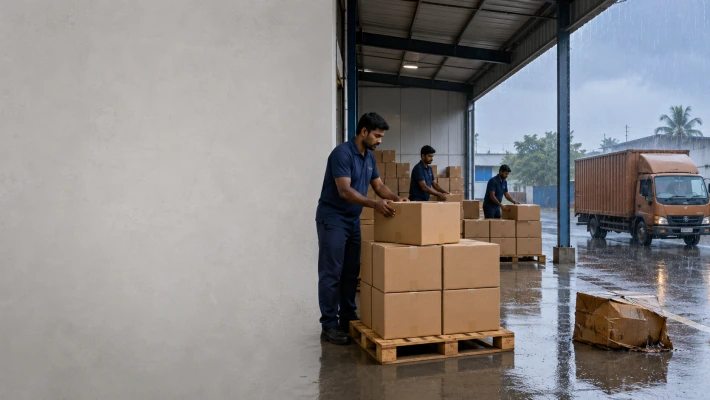
Many boxes become damaged during the short movement between the warehouse and the delivery vehicle.
A box may stay dry for several days in storage and become wet in just a few minutes during loading.
Plan loading work based on the weather. If possible, use a covered loading area. Keep a sheet or temporary cover ready when rain starts suddenly.
The delivery vehicle should also be checked for:
Do not load dry boxes into a wet vehicle. Use pallets or a dry base sheet to prevent direct contact with the vehicle floor.
The driver and delivery team should know that cardboard packages must not be left in rain, even for a short time.
Packaging Needs for Different Products
Different products face different monsoon risks. A single packaging plan will not work for every business.
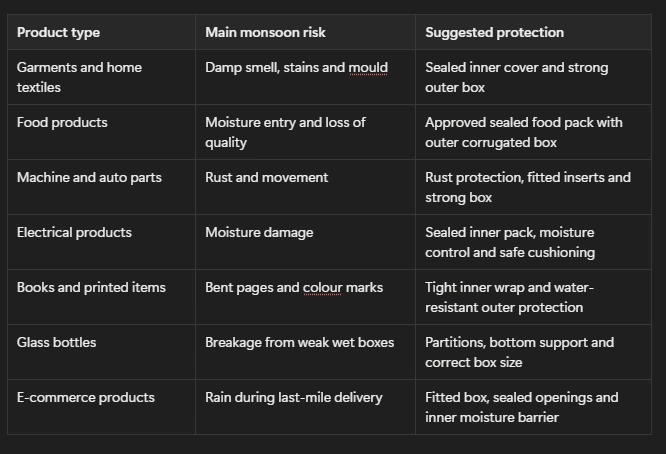
This is why customised packaging is valuable. It protects the product based on its real risks instead of using one common box for everything.
Common Monsoon Packaging Mistakes
Many rain-related packaging failures can be avoided by correcting a few simple mistakes.
Using old boxes again
A used box may already have weak corners, small tears, and low stacking strength. Humid weather can make these problems worse.
Packing products before they are fully dry
If a product or inner pack contains moisture, sealing it inside a box can trap the dampness. This may lead to smell, stains, rust, or mould.
Leaving boxes outdoors
A covered box can still absorb moisture from wet ground and humid air. Keep all cardboard boxes inside a clean, dry area.
Ignoring small damage
A tiny cut, loose flap, or crushed corner can become a major failure during stacking and transport.
Depending only on outer wrapping
Outer wrapping is useful, but the box must still have enough strength to hold the product. Wrapping cannot correct a poorly designed box.
Overloading the box
A cardboard box should never carry more weight than it was designed for. The bottom may open when the box becomes damp.
How to Test Your Box Before the Monsoon
Do not wait for a customer complaint to find out whether your packaging is strong enough.
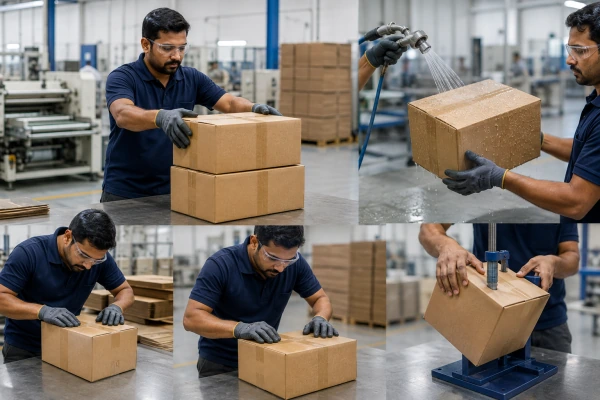
Create a sample box using the actual product, inner cover, tape, and inserts. Test the complete pack, not an empty box.
You can check:
After testing, check the corners, side walls, bottom, tape, printing, inserts, and product. If the box has become soft, bent, or loose, improve the packaging before full production.
Quick Monsoon Packaging Checklist
Before sending your next order, ask these questions:
If you answer “no” to even one important question, your packaging may need improvement.
Frequently Asked Questions
Can cardboard boxes be made completely waterproof?
Normal cardboard boxes are not completely waterproof. However, they can be made more water-resistant with suitable paper, coatings, surface protection, sealing, and inner moisture barriers.
Is a five-ply box always better for the monsoon?
A five-ply box may provide better support for heavy products and stacking, but it is not automatically rainproof. Paper quality, adhesive, coating, box size, sealing, storage, and transport also matter.
How can I stop cardboard boxes from becoming soft?
Use the right cardboard grade, add inner moisture protection, seal all openings, store boxes above the floor, avoid wet vehicles, and test the packed box before dispatch.
Can printed cardboard boxes be used during rainy weather?
Yes. Custom-printed boxes can be used during the monsoon when suitable paper, printing, coating, and surface protection are selected. The print method should be chosen based on the expected moisture exposure.
Should every product have a plastic inner cover?
Not always. The inner packaging should be selected based on the product and its risk. Where plastic is needed, use only the amount required and guide customers to separate it correctly for disposal or recycling.
Are custom cardboard boxes expensive?
Not necessarily. A custom box can reduce product damage, extra filling material, wasted space, and return costs. The right box may provide better total value than a low-cost box that fails during delivery.
A Strong Box Protects More Than the Product
When a customer receives a wet or crushed box, they do not only see damaged packaging. They may feel that the product was not handled with care.
A strong, clean, and dry box creates trust. It shows that your business pays attention from production to delivery.
Monsoon-proof cardboard packaging does not mean adding expensive material everywhere. It means understanding the product, delivery route, storage condition, and rain risk before making the box.
Cuboid Packaging manufactures customised cardboard packaging for businesses across Tamil Nadu. From corrugated shipping boxes and mono cartons to printed boxes, inserts, partitions, and product-specific packaging, every box can be planned around your actual requirement.
Whether you need a small trial quantity, no minimum order quantity support, or an economical bulk order, we can help you select the right packaging for your product and monsoon delivery conditions.
Prepare your packaging before the next rain begins.