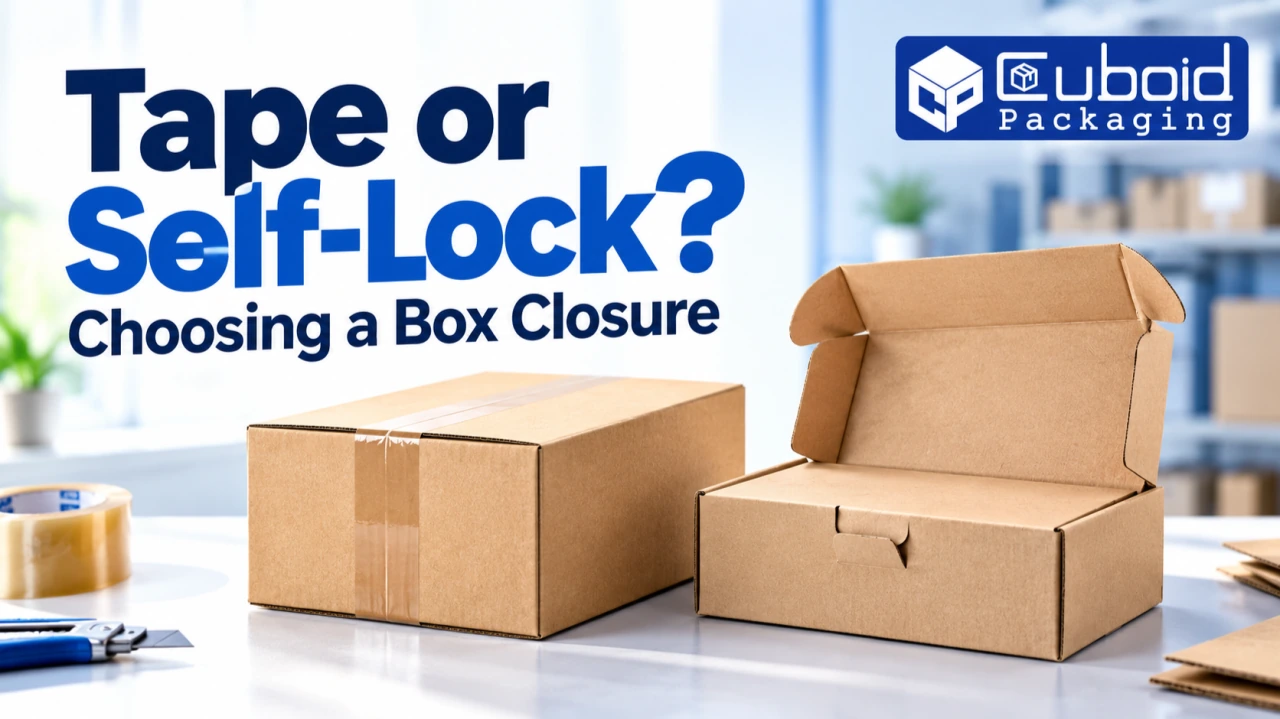
The box is packed. Will the closure suit the journey?
A customer opens a sample mailer and likes its clean appearance. The packing team likes the idea of using less tape. Procurement compares the price with a standard corrugated carton. Before the team decides, somebody needs to ask how the finished pack will stay closed through its actual journey.
Box closure is a design decision involving the structure, product, packing method and distribution route. Tape, glue and mechanical locking features serve different purposes. A neat sample on a desk does not establish which arrangement will work consistently in production or be accepted by the chosen carrier.
For Chennai businesses ordering custom packaging, this guide explains the questions behind that choice. It concerns ordinary packaging planning, not dangerous-goods instructions or a guarantee of damage-free delivery.
A useful sample-review question: “Who closes this pack, how do they know it is closed correctly, and what happens to it next?”
Separate the inner presentation pack from the shipping pack
A box handed directly to a customer may have a different job from one moving through a parcel network. A presentation box can also sit inside an outer shipping carton. Identify which part of the packaging system you are reviewing before comparing closure options.
Write down the route: packing bench, storage, collection, transfers and final opening. Describe whether the pack travels individually or inside another container. Include the actual product arrangement and any inner protection.
This prevents a common misunderstanding. A self-locking feature that makes assembly convenient does not automatically establish that the complete pack needs no additional sealing, protection or outer packaging for the intended shipment.
What a taped closure asks from the process
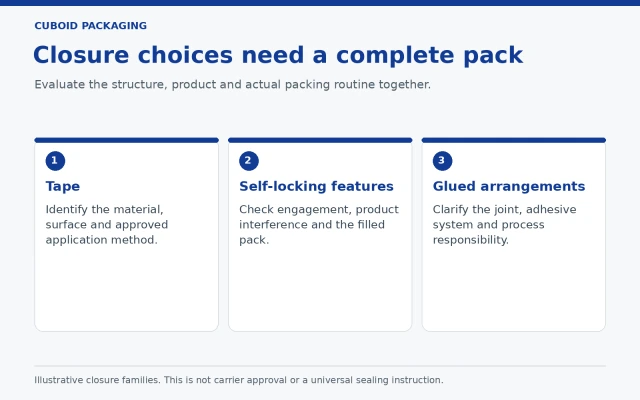
A taped carton depends on the box, tape, surface condition and application working together. Ask the packaging supplier which tape specification and closing method suit the selected construction and route. Keep the proposed material identified rather than describing it only as brown or clear tape.
Carrier guidance provides useful examples. FedEx's published packing material describes H taping across the seams of standard corrugated outer boxes. This illustrates the need for an appropriate closing method; it is not a universal instruction for every box style or carrier.
Check the current requirements for your actual service and shipment. A tape substitution or a different application pattern should return to the agreed review process. The pack should not depend on each operator inventing a slightly different method.
What self-locking features do
Self-locking designs use the cut and folded structure to hold parts of the box in position. The precise arrangement varies. Tabs, slots and other features need to be reviewed as part of the complete design, with the actual material and product.
Ask the supplier to demonstrate the assembly sequence. Which features must engage? Can an operator tell when they are correctly seated? Does the filled product interfere with folding or apply pressure where the structure closes?
Do not choose from a product name alone. The FEFCO Code identifies common box designs through recognised style codes, which can make a specification discussion clearer. The code is a communication aid, not evidence that a particular filled pack has passed your distribution requirements.
Where glue enters the conversation
Glued joints and closures introduce another set of production questions. Identify which joints are made during box conversion and which, if any, are closed during packing. Ask who supplies the adhesive system and who controls its application.
Discuss compatibility with the board, coatings and intended use, together with the conditions needed for a consistent bond. The packaging supplier and responsible process specialists should establish the actual specification. This article does not provide a universal glue choice or application recipe.
Keep product-contact or regulated-use requirements in the brief where relevant. A method suitable for one general retail application should not be carried into a different product category without the appropriate review.
Try closing the pack with the real product
Review a production-representative sample containing the intended product, inner components and quantity. An empty box can hide interference that appears only when the contents are loaded. Include the normal product variation the design is expected to accommodate.
Watch an operator complete the whole task. Does the pack need to be held down while another component is fitted? Is the closing point easy to see? Can the operator apply the intended pressure or engage the tabs without forcing the product?
Record awkward steps as observations. A design may need adjustment even when an experienced demonstrator can assemble it perfectly. The production question is whether the usual team can repeat the approved method reliably.
Distinguish closure from evidence of opening
Holding a box closed and showing that somebody has opened it are different objectives. Ask whether the business needs a feature intended to indicate opening, and how that feature will be assessed in the actual pack.
A sticker, tape strip or locking tab should not be described as tamper-proof merely because it looks secure. If opening evidence matters, define what the recipient should be able to observe and discuss the limits of the proposed solution.
Also review the customer's opening experience. Can they find where to begin? Will opening damage information they need to retain? Does the closure create unnecessary effort for the intended user? Presentation and usability belong in the same sample discussion.
A fictional online-seller example
Imagine a small Chennai home-goods brand choosing between a standard taped carton and a self-locking mailer. This is an illustrative example, not a reported Cuboid Packaging customer project. The team initially prefers the mailer's appearance and assumes it will remove tape from the entire packing process.
During a filled sample review, the team checks the product fit, operator sequence, opening experience and carrier requirements. It discovers that the closure decision cannot be separated from the inner protection and the way parcels are collected and handled.
The brand can now compare two complete configurations with their actual closing methods. It may still choose the mailer, but the decision is based on the full pack rather than a promise that one construction automatically eliminates another material.
Compare the work as well as the box price
Record the materials and steps used by each proposed configuration. Include tape or adhesive, labels, liners, tools, packing time and any observed rework. Use a representative trial instead of assigning an untested time saving to the design.
A lower purchase price can be offset by a more awkward packing task. A more expensive structure may or may not justify its cost through other benefits. The comparison should show the evidence and the assumptions, with no automatic winner.
Keep presentation preferences separate from essential requirements. A pack that fails an agreed essential criterion should not be approved because it looks attractive or performs well on an unrelated measure.
Include the wait before collection
A quick assembly demonstration may not represent a pack that waits for collection or moves into temporary storage. Add the actual waiting and handling conditions to the trial brief, with the supplier helping define the appropriate review.
Record whether the filled pack remains in the intended condition and whether its closing features are still correctly engaged when dispatch begins. If the production routine includes an extended hold, make that visible before approval instead of discovering it only after the first order is packed.
Keep the closing method in the approved specification
Once a configuration is accepted, record the box revision, materials, closure components and assembly method. Include a clear photograph of the correctly closed pack and identify the sample used for approval.
Tell the team how substitutions will be reviewed. A different tape, coating or board condition can raise a new question even when the box dimensions remain unchanged. Keep the approved materials and method connected to repeat orders.
Include storage and handling expectations for the packaging materials themselves. A good specification is easier to reproduce when receiving and packing teams know which condition and identification checks they should perform.
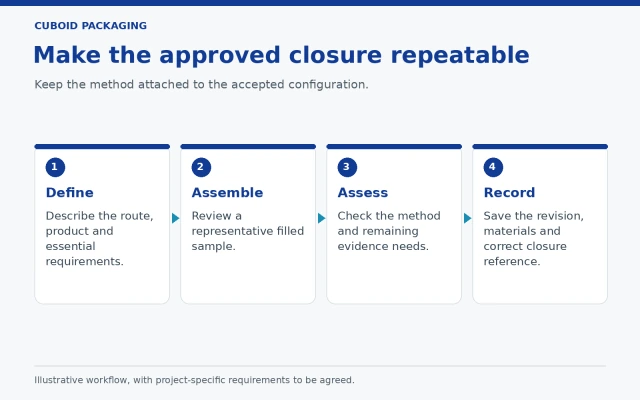
Questions for the sample meeting
Discuss these questions with the people who pack, dispatch and receive the product. A practical closure decision should make sense to all three, with the supplier helping turn the agreed requirements into an identified packaging configuration.
Bring the complete pack to the discussion
Cuboid Packaging offers custom corrugated and die-cut packaging. For a project discussion, share the product dimensions, packed quantity, intended route, expected presentation and current closing method. A filled sample and a clear brief give the team more to work with than a photograph of an empty box.
The best closure is the one selected and verified for the pack's actual purpose, with a method the packing team can reproduce. Tape or self-locking construction is the beginning of that decision, not the whole answer.
www.cuboidpackaging.com | +91 93456 60176 | +91 79042 53042
Sources and further reading